NOTE 01

Field notes · Ethics

ETHICS FOR THE CURIOUS OBSERVER

The rarer the creature, the more one careless visitor can change its season. This is the checklist we follow ourselves, drawn from park rules, dive codes and conservation practice.

Read the First Field Note
NOTE 02

Why wonder needs rules

Nearly everything in this notebook is fragile for the same reason it is fascinating. Cave animals live on tiny energy budgets; a disturbed olm or a bat woken in winter pays a real cost. Bog plants grow slowly in thin, waterlogged peat that keeps the mark of a footprint for years. Coral polyps are living animals only a few millimetres across.

Curiosity also has a market. Rare orchids, carnivorous plants, reptiles and cave invertebrates are taken from the wild for collectors, and online posts with precise locations have led poachers straight to them. The international trade in many such species is regulated by CITES, the Convention on International Trade in Endangered Species of Wild Fauna and Flora, signed in Washington in 1973.

None of this means staying at home. It means watching in a way that leaves the place exactly as it was.

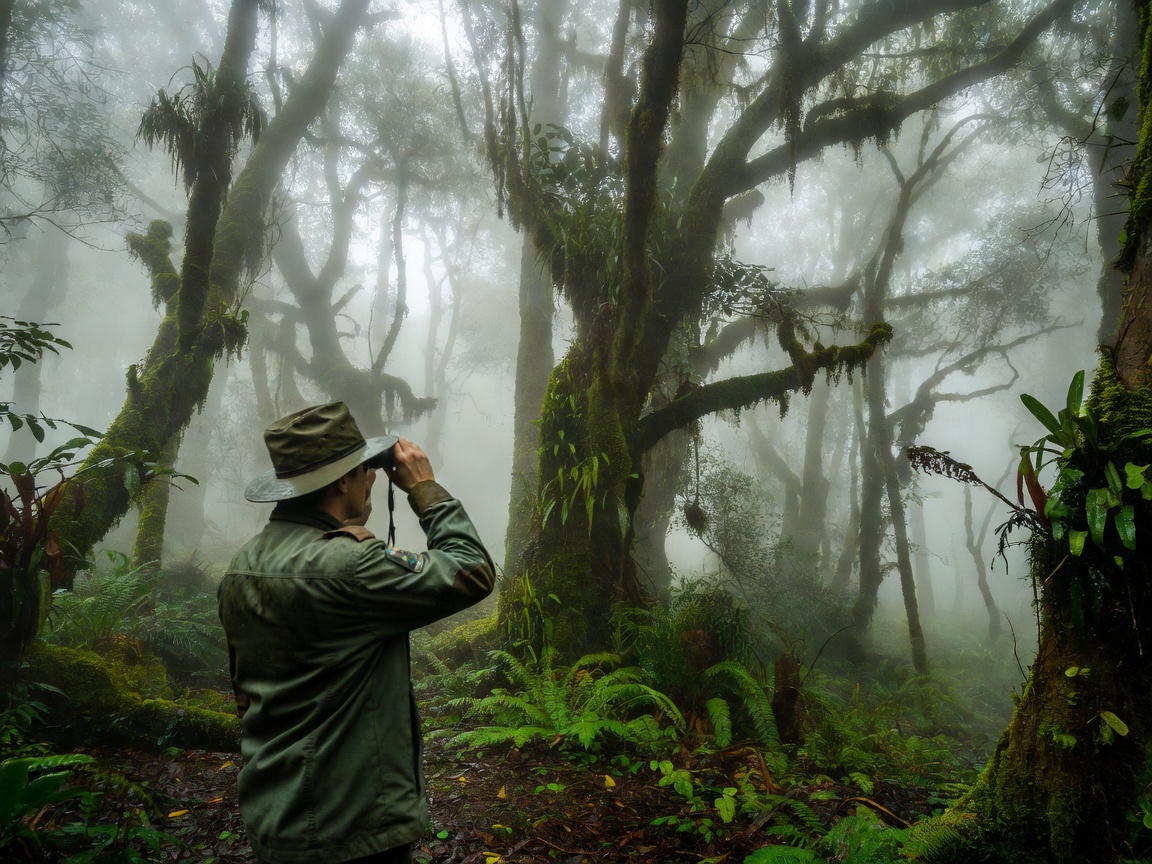
A ranger in a green uniform scanning the canopy of a misty cloud forest through binoculars from a trail
Binoculars and a long lens close the distance so your feet do not have to.
NOTE 03

The checklist

  1. Let the animal set the distanceIf an animal stops feeding, changes direction or watches you, you are too close. In Yellowstone National Park, visitors must stay at least 25 yards from most wildlife and 100 yards from bears and wolves; use rules like these as a baseline wherever you are.
  2. Never feed wildlifeFood changes behaviour, health and survival. Animals that learn to approach people are often the ones that end up removed.
  3. Stay on the path, boardwalk or marked routeBogs, dunes and alpine meadows recover over decades. A short cut for one person becomes a trail for thousands.
  4. Master buoyancy before the reefDo not touch, stand on or kick coral, and keep gauges and fins tucked in. The Green Fins dive code, developed by the Reef-World Foundation with the UN Environment Programme, is a good standard.
  5. Clean your gear between sitesWhite-nose syndrome, a fungal disease, has killed millions of bats in North America. Follow local cave decontamination protocols and do not wear the same boots in two cave systems without cleaning them.
  6. Take nothing homeNo plants, seeds, eggs, shells or animals. If you want to grow carnivorous plants or keep axolotls, buy only from sources that propagate or breed them, and check local and CITES rules.
  7. Keep sensitive locations privateShare the species, not the coordinates. Remove location data from photos before posting rare plants, nests or reptiles.
  8. Skip flash, call playback and drones where they disturbFlash can stress nocturnal animals; playback can pull birds off nests. Launching drones has been banned in US national parks since 2014.
  9. Hire local guides and follow permitsGuides know the rules, the risks and the places that are closed for good reasons. Their income also gives communities a stake in protection.
  10. Turn your sighting into dataRecord what you see with a recognised scheme. A careful note with date, place and photo helps researchers more than a viral post.
NOTE 04

Habitat by habitat

  • Reefs and kelp

    Use reef-safe practices: no gloves that tempt you to hold on, no feeding fish, and no chasing turtles for photographs. Hover, wait and let animals come into view.

  • Caves

    Avoid hibernating bats entirely in winter. Do not touch formations: oils from skin stop growth. Many caves close seasonally for bat colonies; respect the gate.

  • Bogs and carnivorous plant habitats

    Stay on boardwalks. Never trigger traps for fun: each closure costs a flytrap energy, and a trap can only close a limited number of times.

  • Salt flats and alkaline lakes

    Keep vehicles to established tracks and stay well away from nesting flamingo colonies, which may abandon eggs if disturbed.

NOTE 05

Sharing what you see

Citizen science platforms have changed what we know about where species live. iNaturalist automatically obscures the precise location of many threatened species, and eBird treats certain sensitive species differently to protect them. Use those tools rather than public social posts when you find something rare.

The Leave No Trace Center for Outdoor Ethics publishes seven principles worth memorising: plan ahead and prepare; travel and camp on durable surfaces; dispose of waste properly; leave what you find; minimise campfire impacts; respect wildlife; and be considerate of other visitors.

For the status of any species you meet, the IUCN Red List is the place to check before you write about it.

Next: questions readers ask most